

The customisation method you choose directly affects how your branded corporate gifts look, feel, and hold up over time. Embroidery and screen printing are the two most common techniques for apparel and accessories, but they produce very different results and suit different briefs.
This guide breaks down both methods across quality, durability, design complexity, cost, and ideal use cases so you can make the right call for your next project.
What Is Embroidery?
Embroidery stitches a design directly onto fabric using coloured threads, guided by a digitised pattern that an embroidery machine follows with precision. Each thread colour is loaded separately and applied in sequence, building up a textured, raised finish that sits proud of the surface.
It has a long-standing reputation as a premium customisation method, particularly for corporate apparel and accessories where a professional finish matters. For businesses seeking custom embroidery in Singapore, it’s typically the go-to technique for anything that needs to look polished and last well under regular use.
What Is Screen Printing?
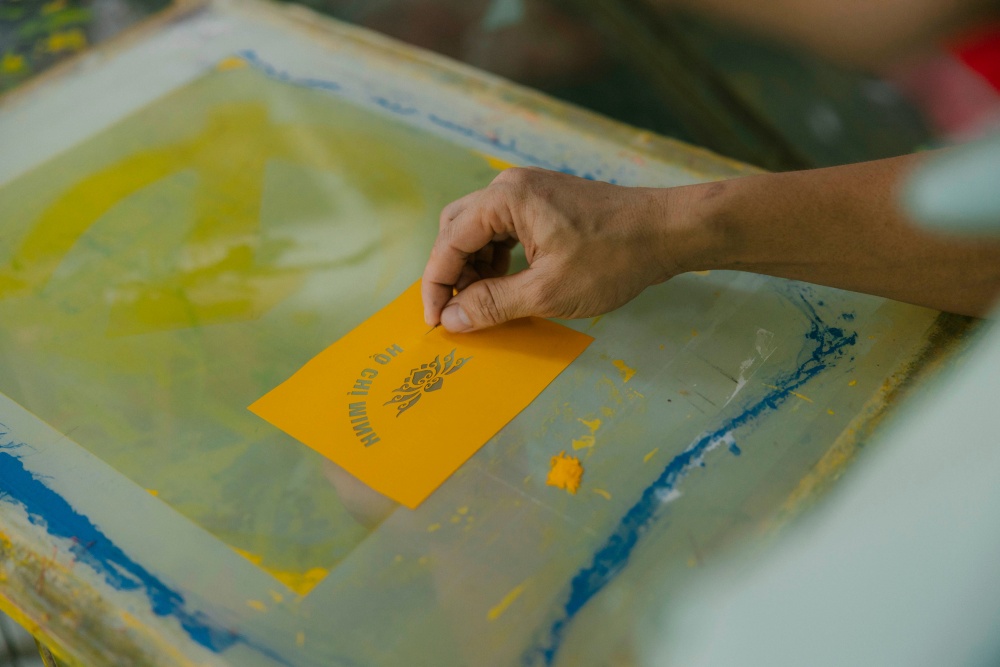
Screen printing pushes ink through a fine mesh stencil onto the fabric or item, with one screen used per colour. Colours are layered in sequence to form the final design. It’s one of the oldest and most widely used techniques for apparel and bag customisation, and it produces a smooth, flat finish that lies on the surface of the material rather than rising above it.
For a deeper look at how screen printing compares to other print methods, read our guide on screen printing vs digital printing.
Embroidery vs Screen Printing: Quality and Appearance
Embroidery creates a textured, three-dimensional finish that reads as high-end at a glance. It’s the method that signals quality without needing explanation, which is why it’s a common choice for executive gifting and premium uniforms.
Screen printing delivers crisp, vibrant, and bold designs with strong colour accuracy. It’s particularly effective for solid graphics and detailed logos where clean edges and saturated colour matter more than texture.
Embroidery vs Screen Printing: Durability
Embroidery is exceptionally durable. Stitched threads resist fading, cracking, and washing far better than printed finishes, and well-done embroidery will often last the lifetime of the garment.
Screen printing is durable when applied correctly, but prints can fade, crack, or peel with repeated washing and heavy use over time. The quality of ink and application method both affect how well a screen-printed design holds up.
Embroidery vs Screen Printing: Design Complexity
Embroidery works best for simple, bold logos and text. Fine details, gradients, and photographic imagery don’t translate well into thread, so designs typically need to be simplified before they can be stitched.
Screen printing handles a wider range of designs, including detailed graphics and multi-colour artwork. Each additional colour increases setup cost, but the technique itself is more flexible when it comes to reproducing complex visuals.
Embroidery vs Screen Printing: Cost and Volume
Understanding the cost difference between embroidery vs screen printing comes down to how each method is priced. Embroidery pricing is based on stitch count rather than colour count, which makes it cost-effective for smaller logos but more expensive as design size and complexity increase. It works well across both small and bulk orders.
Screen printing carries a higher initial setup cost because each colour requires its own screen. However, the per-unit cost drops significantly at volume, making it the more economical choice for large orders with straightforward designs. When the cost is a deciding factor on a high-volume run, screen printing is usually the more practical route.
Embroidery vs Screen Printing: Best Materials and Products
Embroidery is best suited to thicker, structured fabrics and items, including polo shirts, jackets, caps, custom towels, blankets, pillows, and patches. The technique needs enough material to anchor the stitching properly.
Screen printing works best on flat, smooth surfaces like T-shirts, hoodies, and customised bags, where bold designs need to show up clearly. Lightweight cotton apparel works particularly well with screen printing.
Embroidery vs Screen Printing: Which Should You Choose?
Choose embroidery for a premium, professional finish with lasting durability. It’s the right call for executive apparel, corporate uniforms, headwear, and textured items like blankets and pillows, where the raised finish adds to the overall quality of the gift. It’s also the better choice when the item will be worn or used repeatedly over a long period.
Choose screen printing if you need vibrant, bold designs produced at volume. It’s best for event T-shirts, tote bags, and casual apparel, where the priority is visual impact at a competitive per-unit price.
For effective corporate gifting across a range of products, many projects benefit from using both methods. Embroidery on a polo shirt or cap, combined with screen printing on a tote bag in the same order, lets you match the right technique to each item rather than defaulting to one approach across the board.
Where to Get Custom Embroidery Done?
For businesses across Singapore, Nanyang Gifts offers precision-stitched custom embroidery in Singapore with a range of options, turnaround times, and quality assurance to handle both small bespoke orders and large bulk projects.
Our embroidery-ready product range includes patches, caps, polo shirts, jackets, towels, blankets, and pillows, giving you a suitable option for every gifting occasion. Whether you’re producing customised corporate gifts for a client appreciation campaign or branded uniforms for a growing team, we’ll make sure the finish reflects well on your brand.
Related Corporate Gifts Posts

The Best Sustainable Corporate Gifts in Singapore
Top Corporate Gifts With Purchase (GWP) Ideas That Boost Customer Spending
Custom Plushie Tote Bag for THE FACE SHOP Mascot Campaign
Why Pickleball Sets Are the Next Corporate Gift Trend